____ _ | __ )| | ___ __ _ | _ \| |/ _ \ / _` | | |_) | | (_) | (_| | |____/|_|\___/ \__, | |___/_ _ _/_| |__ ___ _ __| |_ _ _/_ / _ \ '_ \ / _ \ '__| | | | |/ _ \ __/ |_) | __/ | | | |_| | __/ \___|_.__/ \___|_| |_|\__,_|\___|
[2025-09-24][Daily]
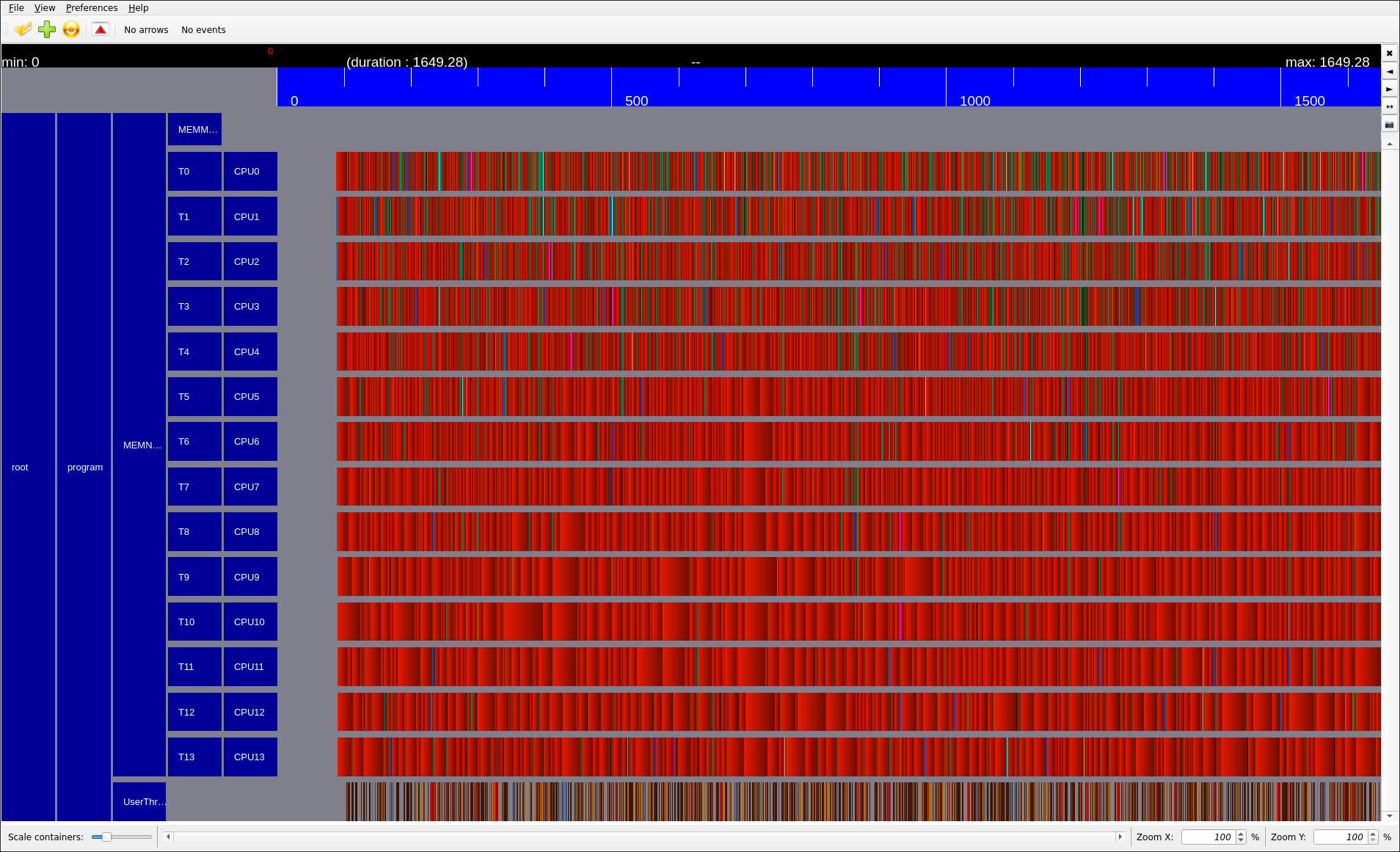
vite ./28x28x3-images-scheduling-result.trace
vite ./512x512x3-images-scheduling-result.trace
# For wayland users
env -u WAYLAND_DISPLAY vite ./28x28x3-images-scheduling-result.trace
env -u WAYLAND_DISPLAY vite .5512x512x3-images-scheduling-result.trace
When using 28x28x3 images the tasks are very small which make it way hard for starpu to schedule tasks on multiple cpu. We even notice a lot of overhead and scheduling on the traces. I knew that it was probably linked to the task size but wanted to improve more my parallelizion before trying this.
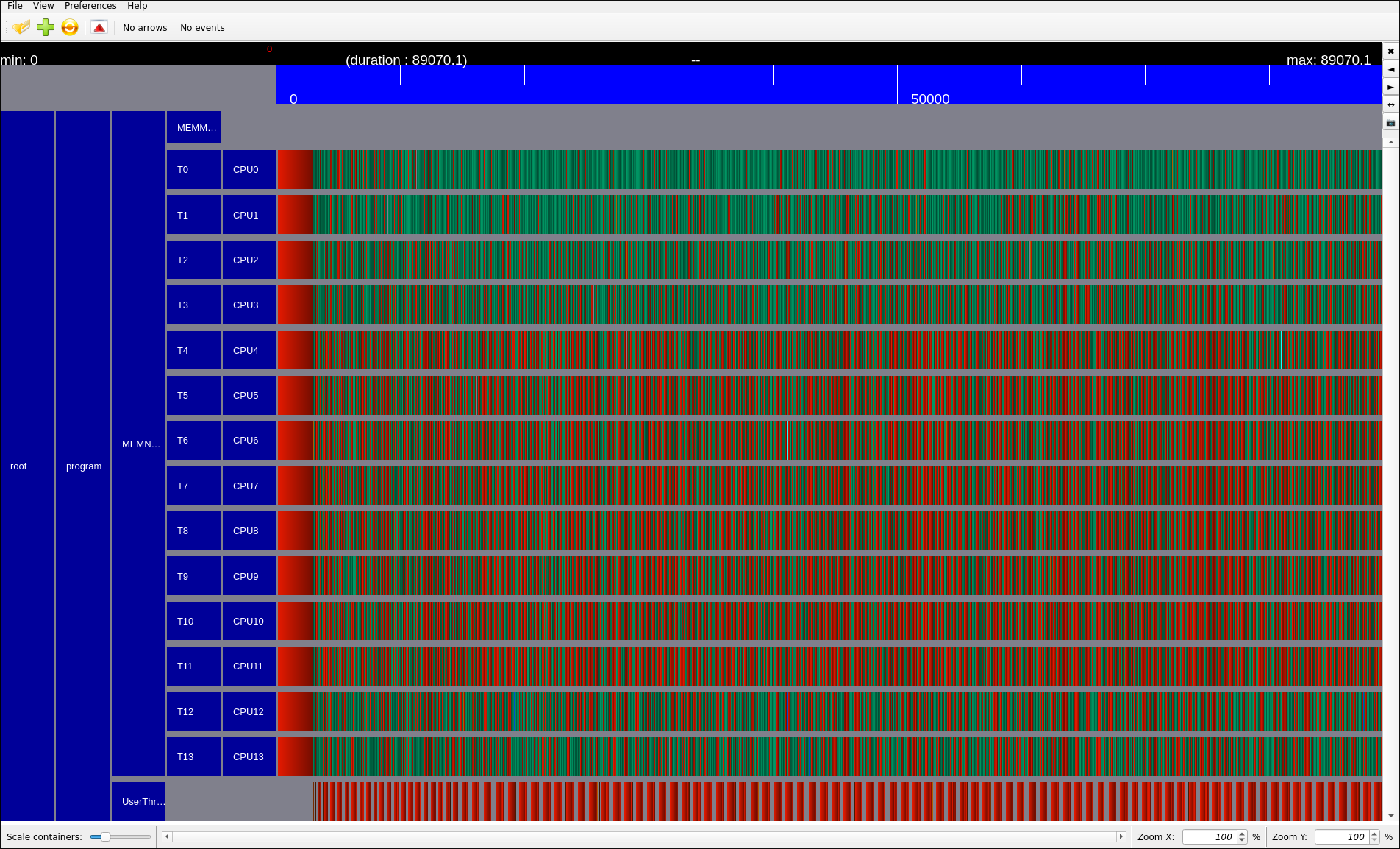
block_sum_z_axis, tensor_sum_t_axis...) that reduces
the batch results in order to update weights and biases. this could probably be fixed by using
built-in starpu reduce capabilities, because right now I simply looping through the datas and
summing "by hand" at the end of each "layer batch".
This is a pretty interesting result because it showcases the limitations of using a TGCS. Of course, using bigger dataset that requires more computation will make DAHL shine because it will parallelize well. Nevetherless, we should probably investigate more about the task granularity: it could be really interesting to have ways to "cut" or "gather" tasks together depending on the size of the input data. Maybe for the 28x28 images we should do data parallelism? and simply pack the tasks together into a big "per batch task".
So we have many ideas to try, however they will be limited by the code.