____ _ | __ )| | ___ __ _ | _ \| |/ _ \ / _` | | |_) | | (_) | (_| | |____/|_|\___/ \__, | |___/_ _ _/_| |__ ___ _ __| |_ _ _/_ / _ \ '_ \ / _ \ '__| | | | |/ _ \ __/ |_) | __/ | | | |_| | __/ \___|_.__/ \___|_| |_|\__,_|\___|
[2025-11-22][Daily]
Before:
for (size_t i = 0; i < n_batches_per_epoch; i++)
{
    dahl_tensor_p* pool_out_p = pooling_forward(batch_arena, pool, conv_out_p);
    dahl_tensor_p* pool_out_p = pooling_forward(batch_arena, pool, conv_out_p);
    // etc...

    dahl_arena_reset(batch_arena);
}
Here dahl_arena_reset is blocking because we must ensure tasks that were using
arena's memory are finished before clearing the arena. This adds a small delay before launching the
next batch. A simple, yet quite effective fix, is simply to use two arenas, and switch them each
batch:
dahl_arena* batch_arenas[2] = { dahl_arena_new(), dahl_arena_new() };

for (size_t i = 0; i < n_batches_per_epoch; i++)
{
    dahl_arena* batch_arena = batch_arenas[i%2];

    dahl_tensor_p* pool_out_p = pooling_forward(batch_arena, pool, conv_out_p);
    dahl_tensor_p* pool_out_p = pooling_forward(batch_arena, pool, conv_out_p);
    // etc...

    dahl_arena_reset(batch_arenas[(i+1)%2]);
}
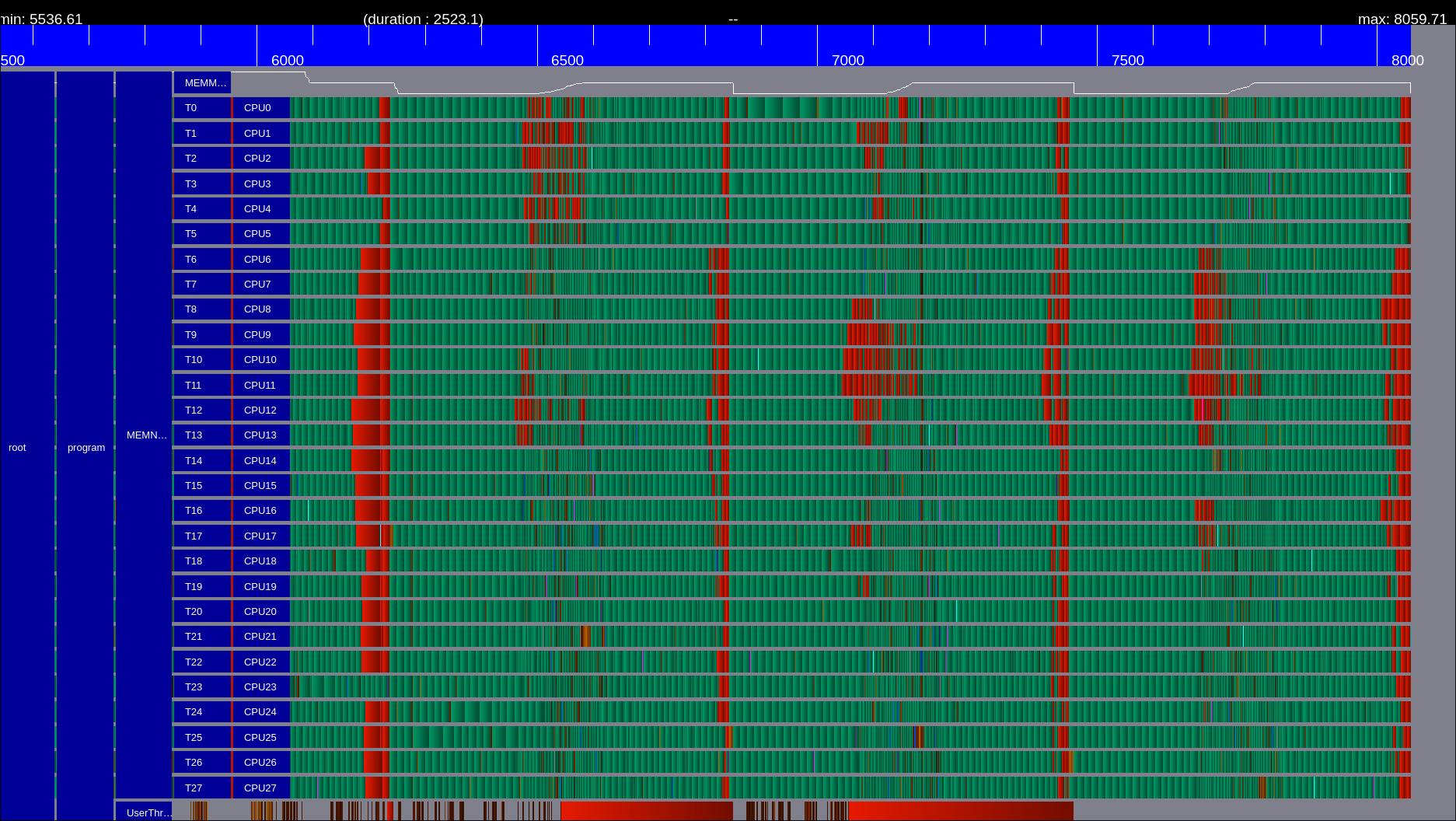
Here is the scheduling state before the improvements:
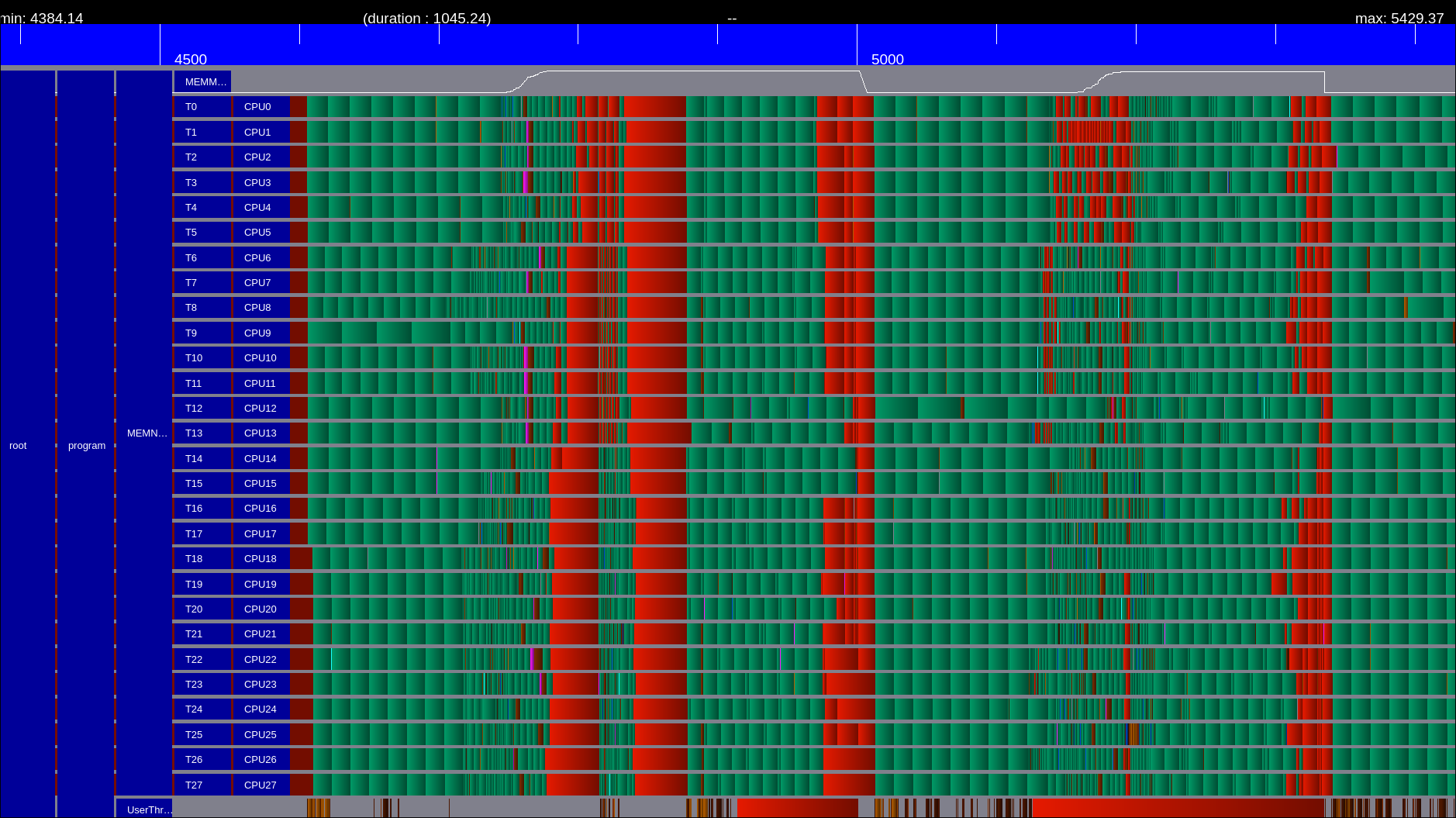
And after:
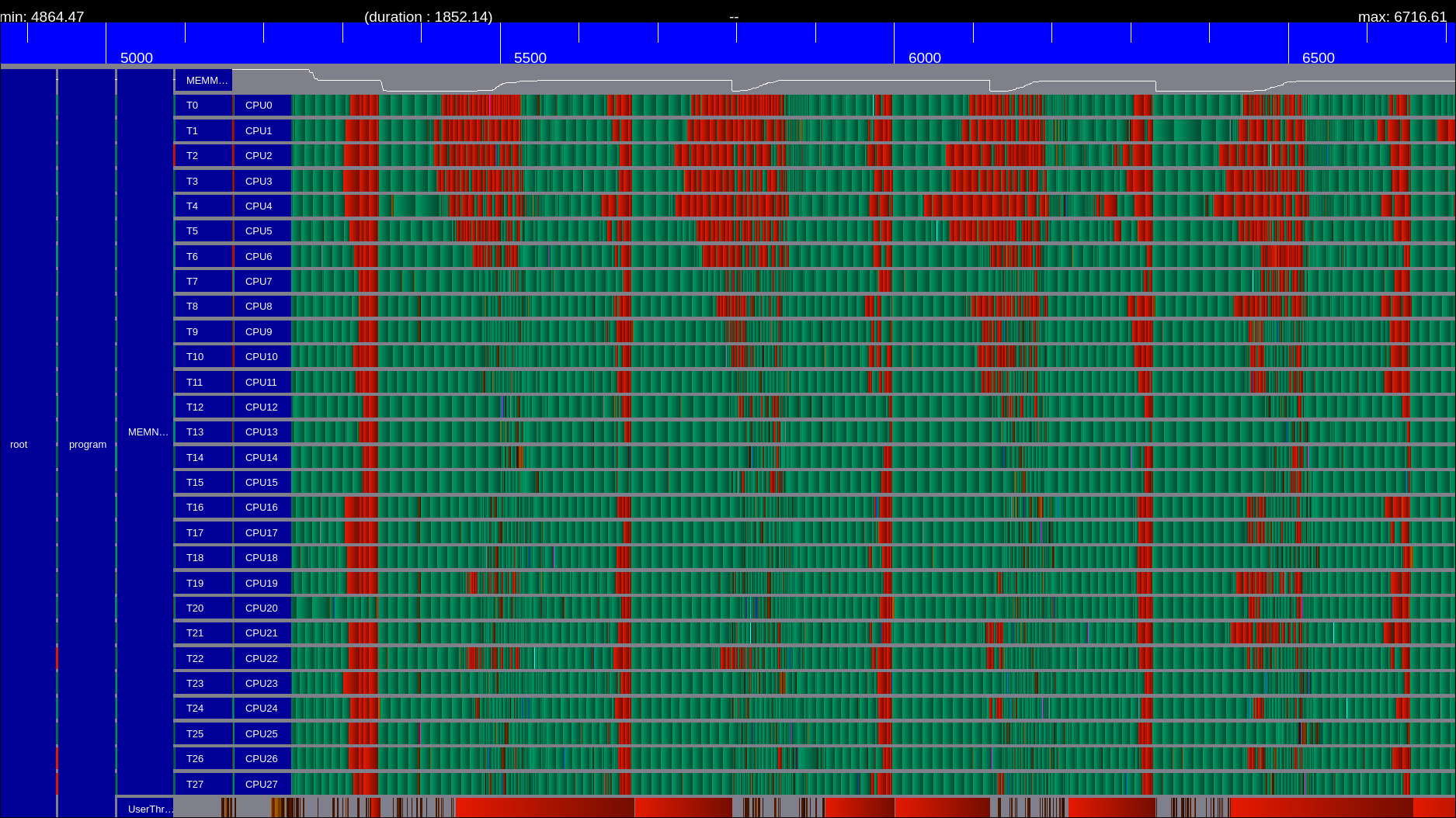
Another remark: when launching multiple batch, we see that our two sleep barriers (that we observed in the previous experiment) are disapearing after a few batches. But our blocks of tasks are becoming less solid, by that I mean that we notice sleep triangles on some cpus. Pretty interesting!
Trying with batch size 120 we still notice the sleep barrier, on the two first batches, then it disapears. However overall scheduling is pretty great, and tasks are pretty solid.