____ _ | __ )| | ___ __ _ | _ \| |/ _ \ / _` | | |_) | | (_) | (_| | |____/|_|\___/ \__, | |___/_ _ _/_| |__ ___ _ __| |_ _ _/_ / _ \ '_ \ / _ \ '__| | | | |/ _ \ __/ |_) | __/ | | | |_| | __/ \___|_.__/ \___|_| |_|\__,_|\___|
[2026-01-19][Daily]
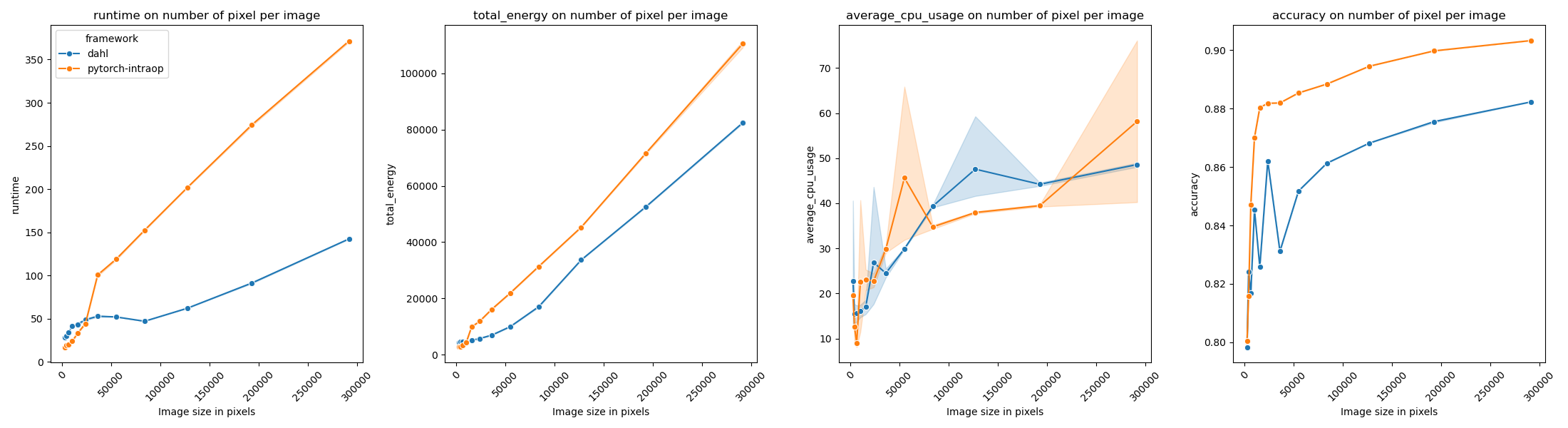
I now run the experiments on 5 epochs, compared to one before. They are globally similar. However, we changed the X axis to be directly the total number of pixels, which makes way more sense and prevent us from adding a new dimension which is not comparable.
Here we are trying with 56 threads (instead of 28 == num cpu for the previous xp) we don't notice
weird bumps in runtime for pytorch this time, really interesting! And now the results are much
closer than DAHL, even though dahl is still slightly better
Also we Added cpu usage to the plot. Globally, no matter the dataset size, our CPUs are underused. Is it a problem though? I guess what matters in the end is reducing the energy consumption for a given training task. But could we get better results if the CPUs were used at 100%?